The stack I'd pick today vs. the stack I picked in 2024
In late 2023 my repos were plain HTML and vanilla JS: a portfolio, a capstone project, nothing with a build step. By early 2024 I'd moved to React, but the React I was writing then and the React I write now barely resemble each other. Not because React changed. Because I stopped optimizing for "does it run" and started optimizing for "can someone else, or future me, understand why it runs."
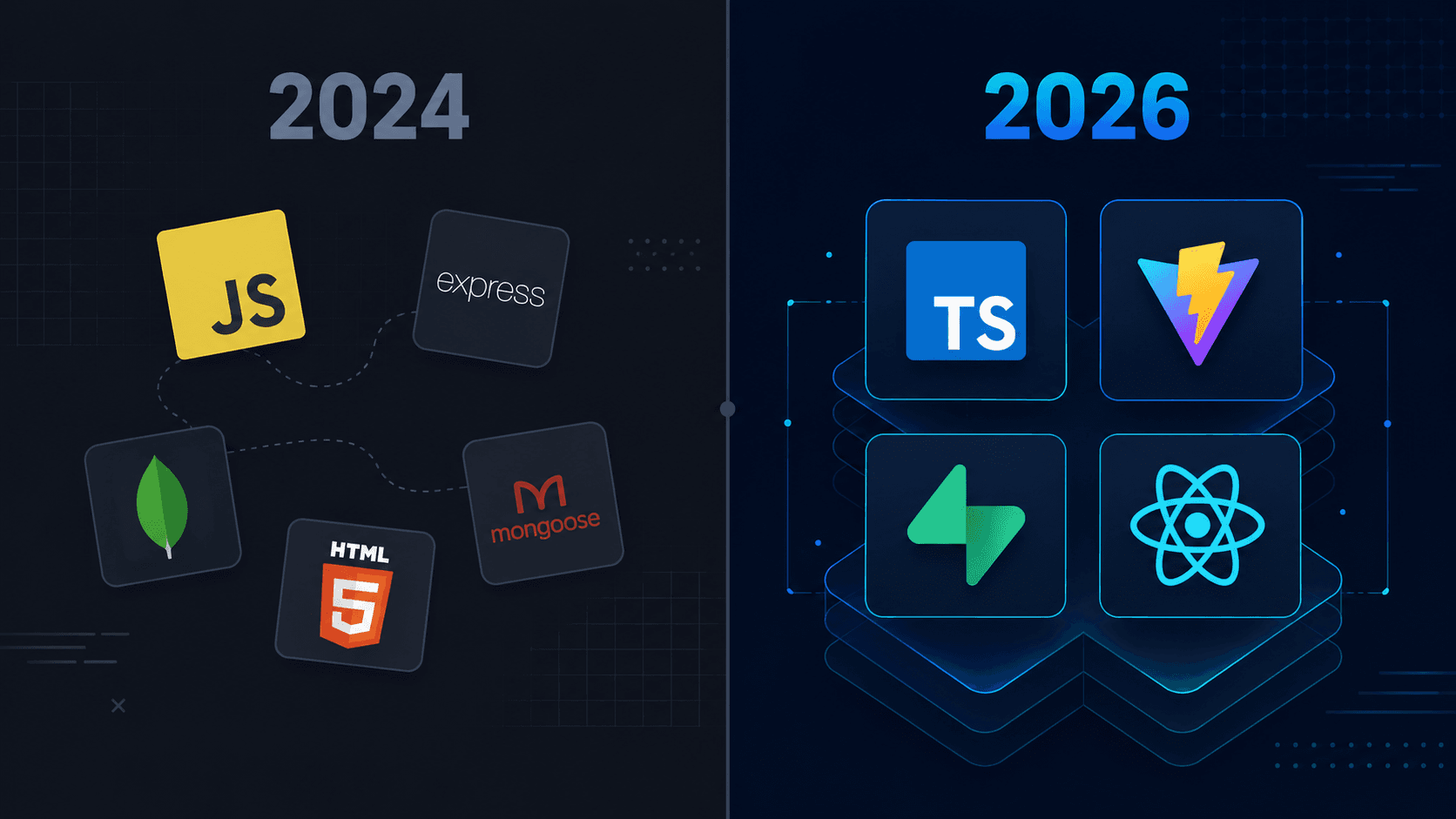
The 2024 stack was: Express with require(), MongoDB with Mongoose, plain JS on both ends, CORS headers I'd copy-paste and re-explain to myself in comments. It worked. GeekMate, a swipe-based networking app I built that year, is a good time capsule: functional, but every file assumes you already know what's happening, because I was the only one who ever read it.
What changed by 2026 wasn't the framework. It was what I made non-negotiable. Building CodePersona, I didn't pick TypeScript because it was trendy. I picked it because I was tired of finding out a field was undefined in production instead of at compile time. Same with Vite over CRA: I wanted a dev loop fast enough that I'd actually run the app between edits instead of batching changes and hoping.
Today, if I'm starting something new: TypeScript, not JavaScript, even for a weekend project, because half my 2024 bugs were type errors wearing a disguise. Vite over CRA, no contest. Supabase or a typed ORM over raw Mongoose queries, because I don't want runtime to be the first place a schema mismatch shows up. Component libraries like shadcn instead of styling every button from scratch, not because I can't, but because that time is better spent on the 10% of the UI that's actually novel. And LangChain/LangGraph now sit next to the web stack by default, because almost nothing I build in 2026 doesn't touch a model somewhere.
The honest version of this post isn't "new tech is better." It's that my 2024 stack optimized for shipping something, and my 2026 stack optimizes for shipping something I can still explain a year later. That's the actual upgrade: the tools just happen to be the evidence of it.